
Oklahoma Busted Mugshots and Records
A booking starts once a jail takes someone in after an arrest. Staff log basic details. They note the arresting agency, assign a booking number, and list the stated charges and bond. An identification photo usually follows, and each record marks a custody event plus the charge as written that day.
Oklahoma runs no single statewide jail roster. County sheriffs, jail boards, municipal agencies, and contracted systems keep their own booking records. The Department of Corrections holds a separate file after a sentence puts someone in state custody. One system cannot answer for another. A roster shows who is in custody right now. A docket tracks the case. A DOC profile covers state corrections only. Match the right record to the right question.
Before calling an outcome, read the court's final docket entries. Confirm current custody with the agency that made the arrest.
The state research snapshot dated September 22, 2026 found a patchwork of official interfaces and request-only routes. That date matters because public portals can change, go offline, or alter the period they display. A name match is only a lead. Compare the county, date, agency, case number, and other lawful identifiers before treating two records as the same event.
Oklahoma Mugshot Law and Access
Oklahoma's Open Records Act sets the starting point. Under 51 O.S. §§24A.5 and 24A.8, agencies holding law-enforcement records must open specified arrest facts and jail-register or booking details. Attorney General Opinion 12-022 treats booking photos as part of an arrestee's physical description. Nothing here forces a county to run a searchable photo gallery.
Oklahoma has no general pay-to-remove ban on the books. The 2016 SB 1530 bill and the later SB 379 proposal both died in the Legislature. Neither created a takedown deadline or a private remedy. Treat their terms as history, not current rights. Juvenile records stay confidential under Title 10A, subject to statutory exceptions. Adult sealing and expungement follow Title 22 procedures. A court order can close official access, though copied images may still sit with private publishers. The full statute and removal analysis lives on the law page.
The official SB 1530 bill history adds one detail. The Senate passed it. The bill stopped at House second-reading referral.
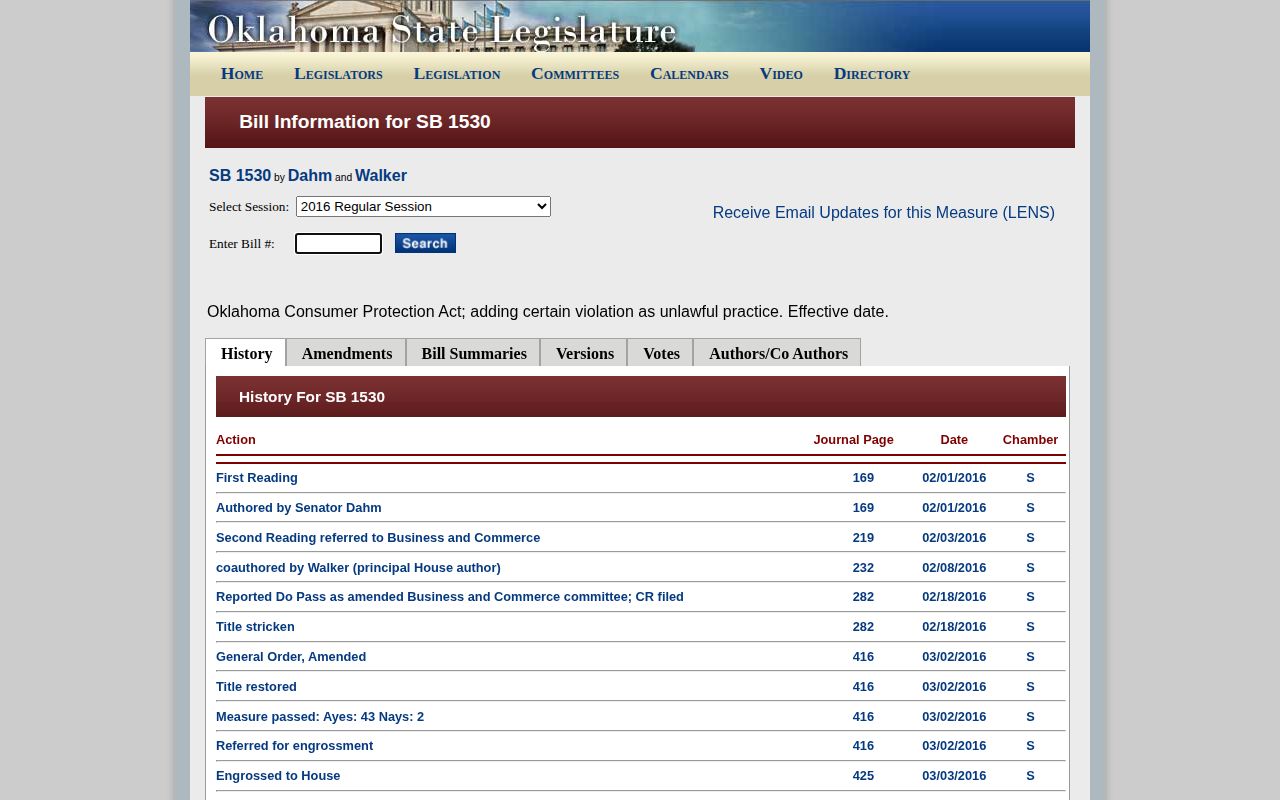
The bill makes useful legislative history. Its deadline and remedies never became law. The Oklahoma Attorney General opinion on booking photos spells out the public-record rules that cover booking photographs.
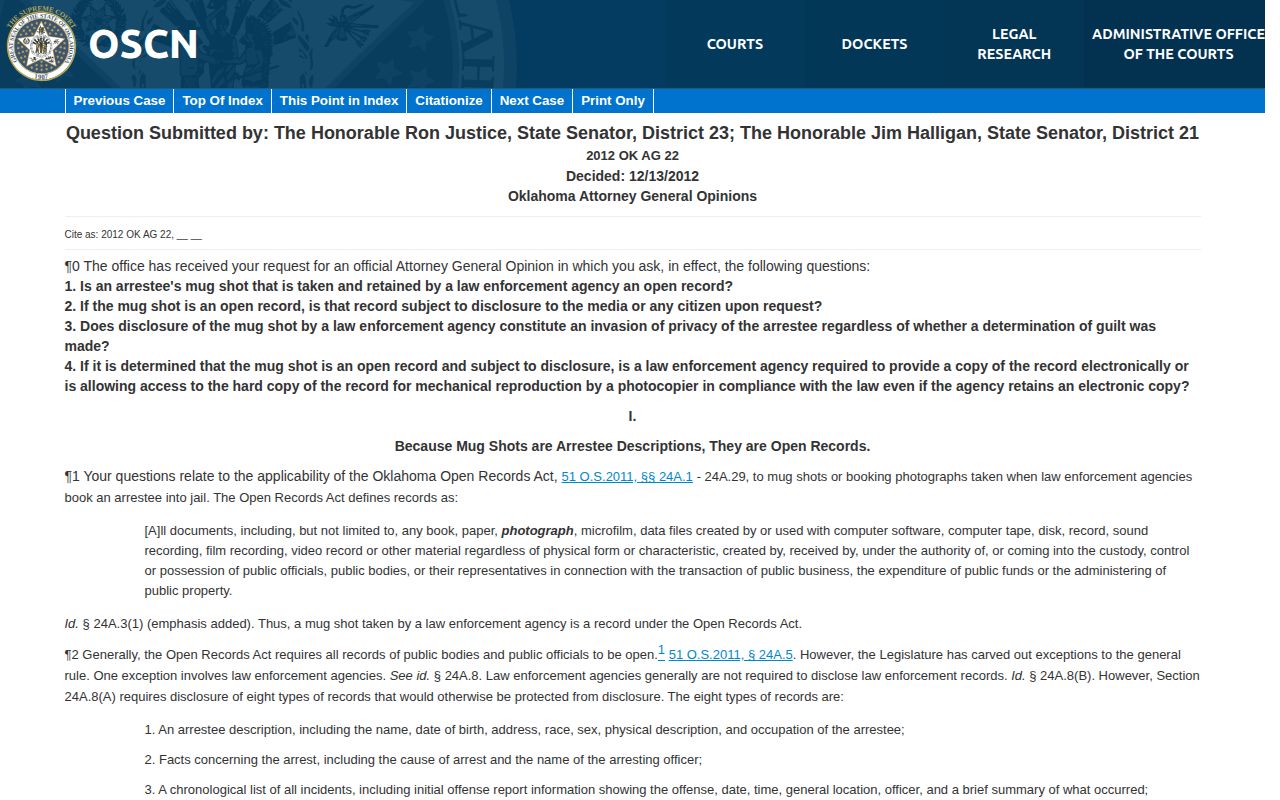
That opinion covers law-enforcement records only. It promises no public gallery in every county. What the law does not promise: a public record does not mean a public web image, permanent online retention, or one rule for every page. Agencies may redact protected details. They may also charge allowed direct costs for copies. If an office withholds a record, ask which exemption applies and whether any part can be released.
Booking Record Fields in Oklahoma
There is no single statewide booking form. A county record may combine the booking sheet, jail-register entry, and an image kept by the booking agency. A request can ask for the fields that office maintains. ODOC's public offender profile is a state-prison record and uses its own identifiers and sentence information. The live interface can change, so treat the labels visible on the official result as controlling.
| Record field | What it can show |
|---|---|
| Name and identifiers | The name recorded at intake and any booking, case, or agency number shown in that system. Check identity with care. |
| Arrest and booking details | Arresting agency, arrest facts, booking date, intake status, and the jail register entry when kept and releasable. |
| Charges as booked | The charge entered at intake. It can differ from a charge later filed in court or the final outcome. |
| Bond and custody status | A bond amount or release condition when present, and whether the roster currently shows the person in custody. |
| Booking photograph | An identification image associated with the booking if that office took and retains it and public access is allowed. |
| ODOC profile fields | For state-sentenced custody, the ODOC number, facility, sentence and status details shown by the current lookup; this is not the county booking sheet. |
A blank field proves nothing. Some counties post a text-only list. Others show an empty photo area. Many current-custody searches drop people who have already been released. Ask the record holder for its booking sheet and photo instead of assuming every screen shows every field.
How to Request Oklahoma Mugshots
Go to the office that actually holds the record. A county booking photo sits with the sheriff, a jail authority, or a city agency. The County Directory points you to the right county site, and from there the local custodian and its request path. Prison is different. ODOC runs its own offender lookup and public-records process. Oklahoma lets agencies charge reasonable copying costs, and some statutes add other fees. No single fee or turnaround applies statewide. For state corrections, start at ODOC's public-data and records page.
Name the record you want, such as an identification photograph. Then confirm the office can release it from the file it keeps.
- Identify the county or agency that booked the person. Add a known booking date, case number, or other detail that helps the records unit find the right event.
- Ask for the booking sheet or jail-register entry and the booking photograph kept for that event. Request electronic delivery in the format held by the agency.
- Ask for a fee estimate before copies are made. If a record is withheld, request the specific legal basis and any segregable part that can be released.
- For ODOC, give the person's name and ODOC number if known, identify the exact profile or identification photograph sought, and ask whether it is releasable from active or closed records.
- For a broad historical search, narrow the date range and ask whether the record was destroyed, transferred, digitized, or closed under a retention schedule.
Section 24A.8 creates no duty to build an online index. It also does not revive a record lawfully destroyed. Title 19 leaves retention decisions to county governing bodies when no other law speaks. So no statewide rule protects every booking photo. A sealing or expungement order should go to each custodian named in it. The order binds that office's copy. It does not bind a copy already held by a news archive or private index.
How to Find Oklahoma Busted Mugshots
Match the record to the custody stage. A fresh arrest often shows up first on a county roster or booking feed. Bond someone out, and the name may drop off, even though the booking record stays with its custodian. A state sentence points to the ODOC lookup. Court entries answer something else entirely: the outcome of the case. One result is never the whole story. Follow each record back to its source.
- Use the County Directory to choose the county or city agency that handled the arrest. A city arrest may lead to a city holding cell, a county jail, a citation release, or another custodian.
- Open the official sheriff, jail, detention-center, or police page linked by that county. Search the live roster or booking feed if one is available, and note its stated date range.
- If the person has left the roster, ask the agency for the booking record and image. Do not read a missing roster entry as a court result.
- For a person serving a state sentence, use the ODOC offender lookup. For federal custody or current ICE detention, use the separate federal or immigration locator.
- Search the court portal by county and case number, then read the docket through its latest entry. OSCN directs users to ODCR for counties that are not available there.
A name alone proves little. Check the booking county and date. Note the agency, the case number, and any lawful identifier the official source provides. Skip private details a secondary result adds that the government record lacks. Still unclear? A narrow request to the office that made the arrest beats a wider name search.
Busted Mugshots by County
Across all 77 counties, access looks like a patchwork. Blaine, Bryan, Caddo, Canadian, Carter, Choctaw, Cimarron, Cleveland, Comanche, Craig, Creek, Custer, Delaware, Garfield, Garvin, Grady, Greer, Harmon, Jackson, Johnston, Lincoln, Logan, Love, Major, Mayes, McClain, Muskogee, Noble, Oklahoma, Okfuskee, Okmulgee, Osage, Ottawa, Pawnee, Payne, Pittsburg, Pontotoc, Pottawatomie, Rogers, Seminole, Sequoyah, Stephens, Tulsa, Wagoner, Washington, and Washita counties each offer an official public roster, custody page, or booking interface.
Adair, Alfalfa, Atoka, Beaver, Beckham, Coal, Cotton, Dewey, Ellis, Grant, Haskell, Kay, Kingfisher, Kiowa, Latimer, Le Flore, Marshall, McCurtain, McIntosh, Murray, Nowata, Roger Mills, Texas, Tillman, Woods, and Woodward counties publish no public roster or photo-capable web result. That does not mean no record exists. Cherokee, Harper, Hughes, Jefferson, and Pushmataha call for a custodian-specific check, since their files describe shared custody, a separate jail operator, or an unverified interface.
The directory lists all 77 county routes and county seats. Pick the county where the arrest happened. Then confirm which office actually holds the booking record. The county seat alone does not mean the sheriff runs the jail or books every city arrest. Browse the Oklahoma County Directory →
Oklahoma Busted Booking Feeds
Oklahoma's county portals follow no shared posting schedule or record window. Some list people in custody right now. Others post a daily or recent-booking list. A few offer a short release view or a vendor search. Formats include current-only, daily, recent-booking, and 48-hour release views. There is no single statewide update cadence. A roster changes fast. Someone may be released, transferred, or bonded out. So read the date range on the live county page. Check the system label too.
Photo policy varies just as much. Osage, Cleveland, Wagoner, Washita, Seminole, Custer, Creek, Craig, Ottawa, Pottawatomie, and several vendor portals display photo-bearing lists. Comanche, Muskogee, and Delaware show images when available. Not every record carries one. Pontotoc's daily inmate list and Garfield's text roster show no confirmed public photo. Plenty of sites cover current custody only. An empty result or a broken image box never proves a photo is missing.
Official apps layer on top rather than forming one statewide feed. Canadian, Delaware, Sequoyah, and Greer counties offer booking-related app features. Beckham's app handles tips and safety information, not a photo roster. VINE is a separate custody alert service. It notifies registered users about custody status. Web, phone, text, email, TTY, and app channels all work, as Oklahoma VINE explains. It replaces neither a jail search nor a court docket. A roster, a release notice, and a booking record each describe a different point. They track the same event. Trust the date and holding agency shown by each source.
ODOC and Federal Mugshot Records
The Oklahoma Department of Corrections runs the official lookup for people sentenced to state prison. A DOC result is not a county arrest roster. The agency has shifted data sources recently. Read the fields and photo display from the current page, not an old screen. ODOC policy says identification images are kept. Even so, the public site makes no promise. Not every profile carries a photo. Its deeper rules on photos and records sit on the ODOC mugshots page.
For a state-prison record, open the live ODOC offender lookup. Search the fields it offers today. Then check the ODOC number, facility, sentence, and status on the matching profile. A former offender can drop out of the active search into closed records. Someone booked in a county jail may never reach state custody. That person may not appear at all. The live ODOC search screen shows the current labels and profile details.
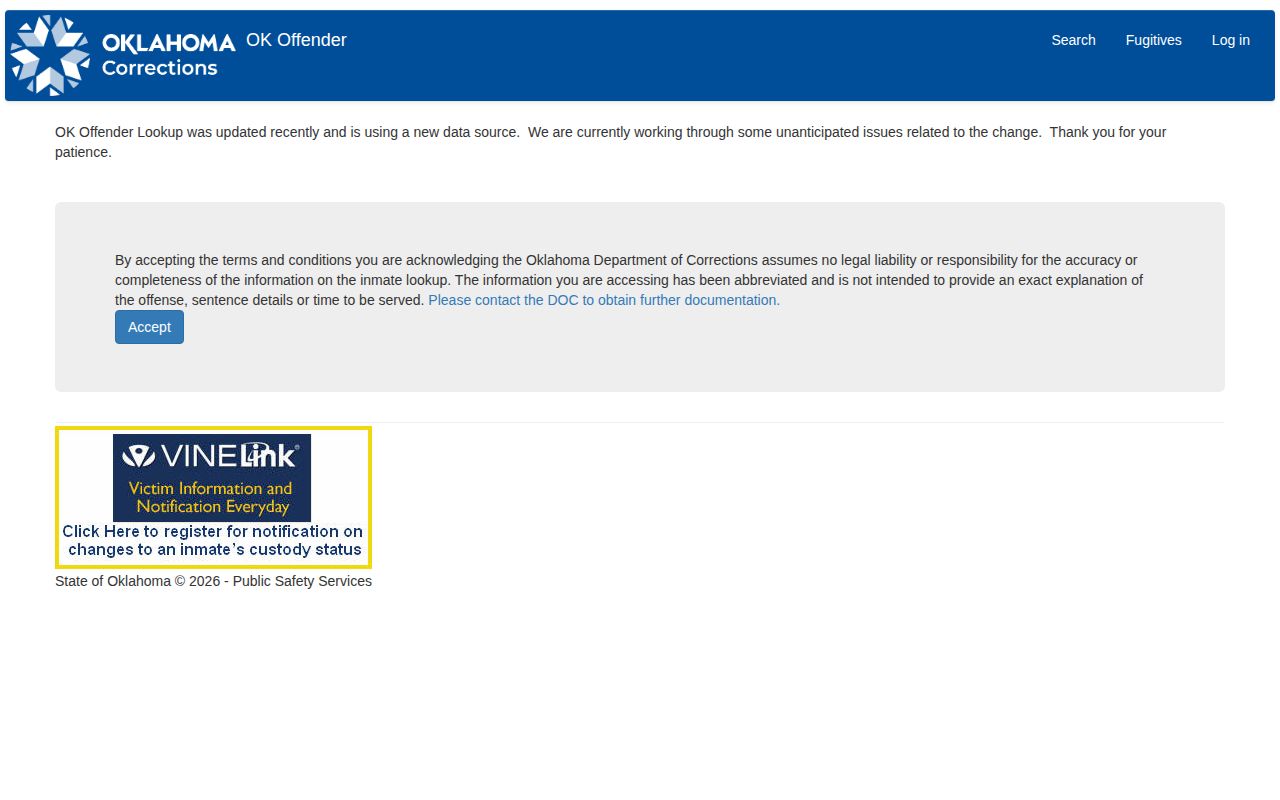
Treat that result as covering state custody only. Then ask ODOC directly about a former offender or a record missing from the public lookup. Federal custody works on a different track. The Bureau of Prisons locator covers inmates held from 1982 to the present. Search it by name or register number. It returns custody details, not booking photos. A status of released or not in BOP custody leaves room for detention elsewhere. The BOP Inmate Locator displays the federal search fields it offers.
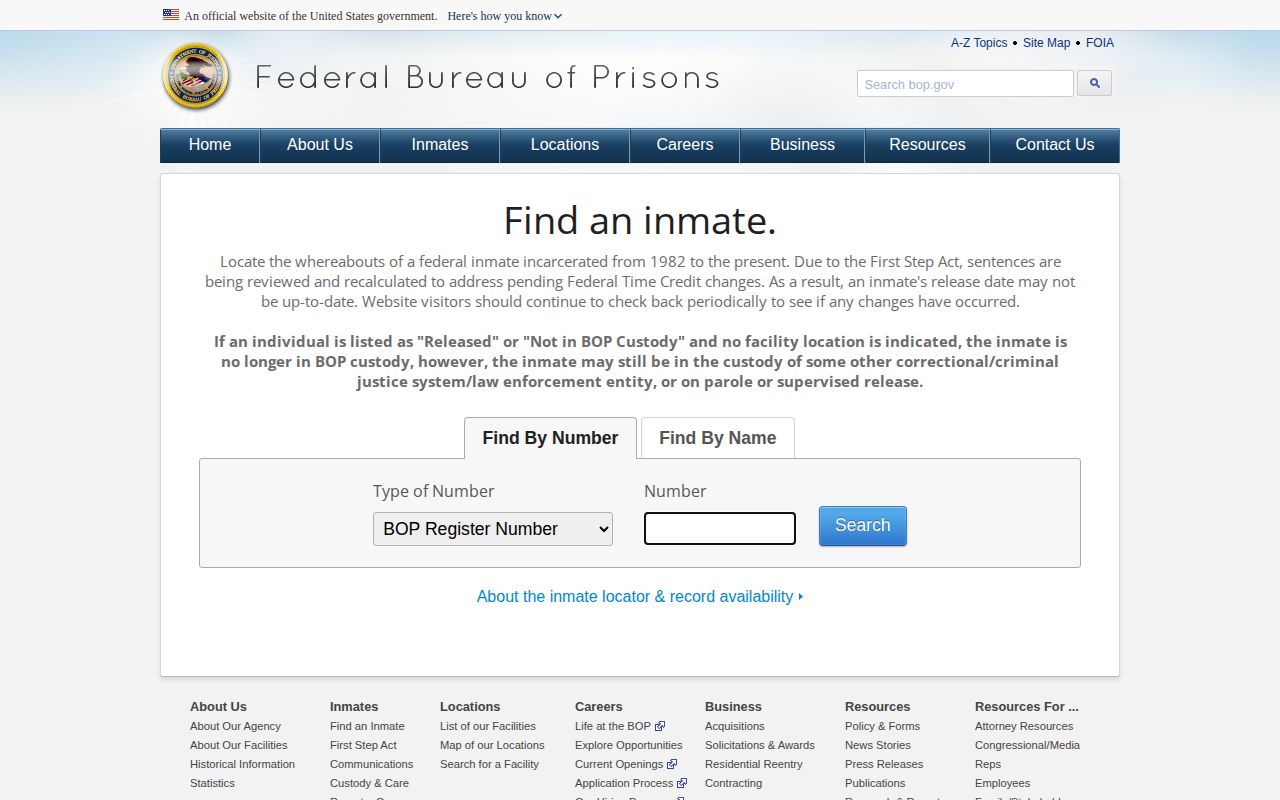
None of that replaces a county booking request or an Oklahoma court record. Immigration detention has its own tool. The ICE Online Detainee Locator works only on exact name matches. It is not a photo source. Nor does it list everyone ever detained. A similar name or an empty result tells you nothing about status.
Oklahoma Busted Arrests and Court Records
A booking entry is just the start. The Oklahoma State Courts Network docket portal is the place to begin. Search by name first. Then confirm the county, case number, date, and identity. OSCN sends users to ODCR instead, for courts outside its system. Later docket entries can show a filing, dismissal, plea, or deferred result. They can also show a judgment, sentence, appeal, or a post-conviction event. The OSCN docket search is the official path for those entries.
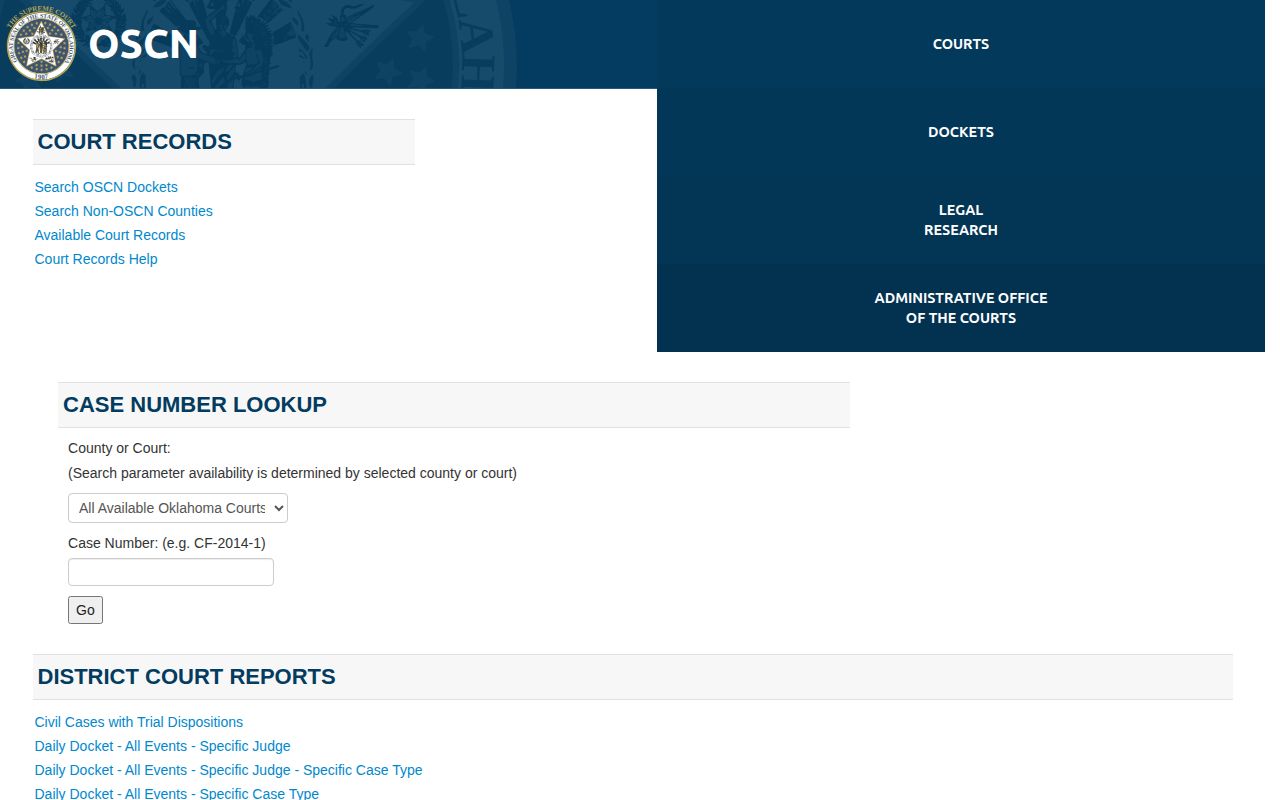
A docket separates what jail intake claimed from what a court later did. The portal is not a booking-photo service. Its job is the legal path after an arrest. A jail's charge line reflects what officers alleged at booking. The filed case can change or never appear. OSBI's criminal-history repository gets dispositions from prosecutors and court clerks. A result can be wrong. The certified court entry and the custodian's own process matter more than a missing roster line.
Can a booking record show whether someone was found guilty? It lists an arrest charge, bond, or custody status at most. Those fields are not the outcome. The court docket's latest disposition entry is.
Where Oklahoma Busted Mugshots Appear
Start with the government source that made the record. News pages and private indexes can point to a lead. They cannot confirm who holds custody now. They also cannot say what a court decided. The table sorts each source by the record it can actually show.
| Source | Record and photo scope | How to use it |
|---|---|---|
| County sheriff, jail, or detention page | Current custody, daily or recent bookings, and a photo when the system provides one. | Choose the county in the directory and follow its official roster or request path. |
| Arresting agency or records unit | Booking sheet, arrest details, release or transfer information, and any retained photo. | Send a narrow public-record request to the agency that keeps the record. |
| OSCN or ODCR | Court docket and later case activity, not the jail's photo. | Confirm county and case number, then read the final entries. |
| ODOC | State-sentenced offender profile and any photo shown by the current lookup. | Use the official offender-information route for state custody. |
| BOP or ICE locator | Federal inmate or current ICE detention information; neither is a statewide booking-photo archive. | Search the matching custody system and verify identifiers. |
| Oklahoma VINE | Custody status notifications, not a photo or disposition record. | Use it for alerts, then verify with the agency or court. |
| Newsrooms | The Oklahoman, Tulsa World, KOCO 5, News 9, KFOR 4, FOX23 News, and News On 6 report state or local events; an article is not a roster. | Use the outlet's newsroom route for a factual error or documented outcome. |
| Secondary indexes | BustedNewspaper, RecentlyBooked, Mugshots.com, Arrests.org, and Mugshots.zone publish unofficial state or county indexes with different coverage and freshness. | Treat a result only as a lead. Return to the agency and court for current, complete records. |
The RecentlyBooked Oklahoma state page lists its county links alongside recent-arrest counts the site reports itself. Those numbers describe that secondary site's snapshot, not any official statewide total.
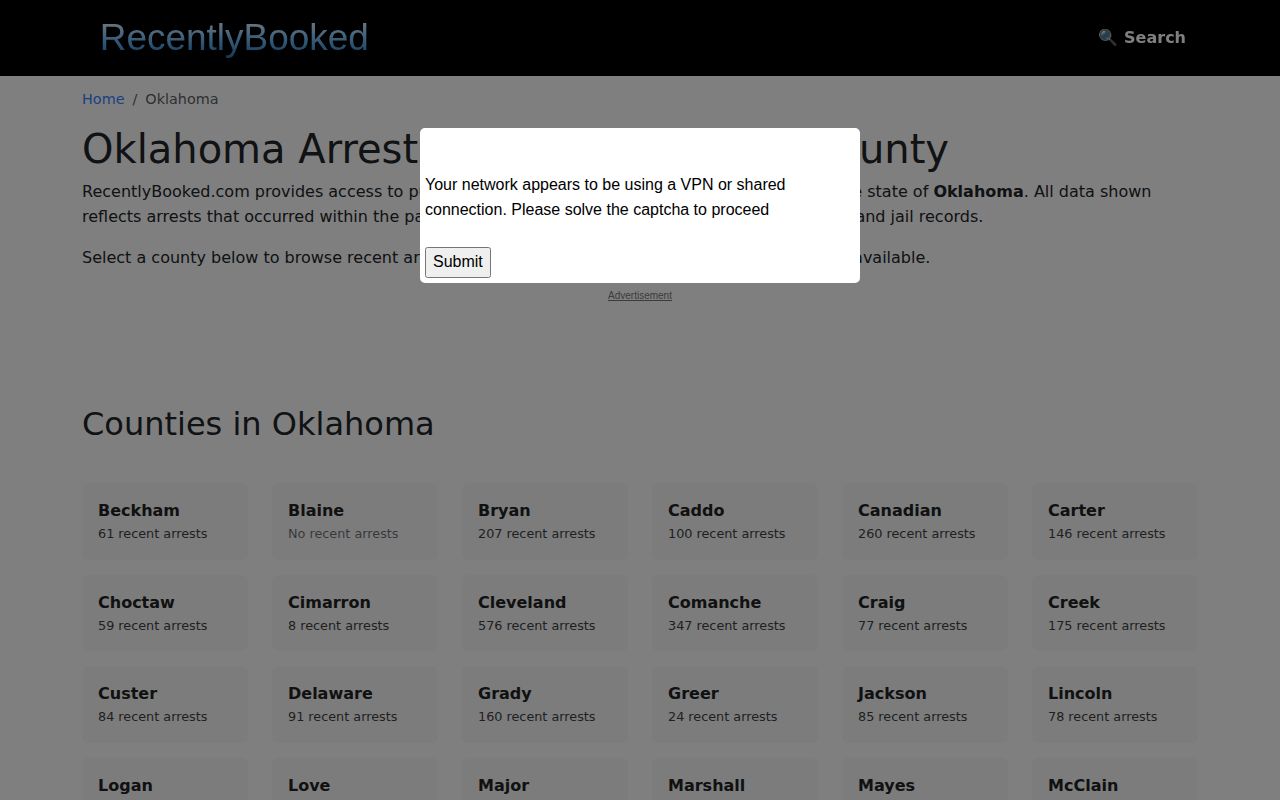
The page offers a starting place for its county links. Confirm details with the county agency before trusting a listing or current status. The Mugshots.com Oklahoma state index carries the publisher's coverage statement. It also gives the publisher's account of booking-photo publication. It stays an unofficial source and cannot confirm a court outcome.
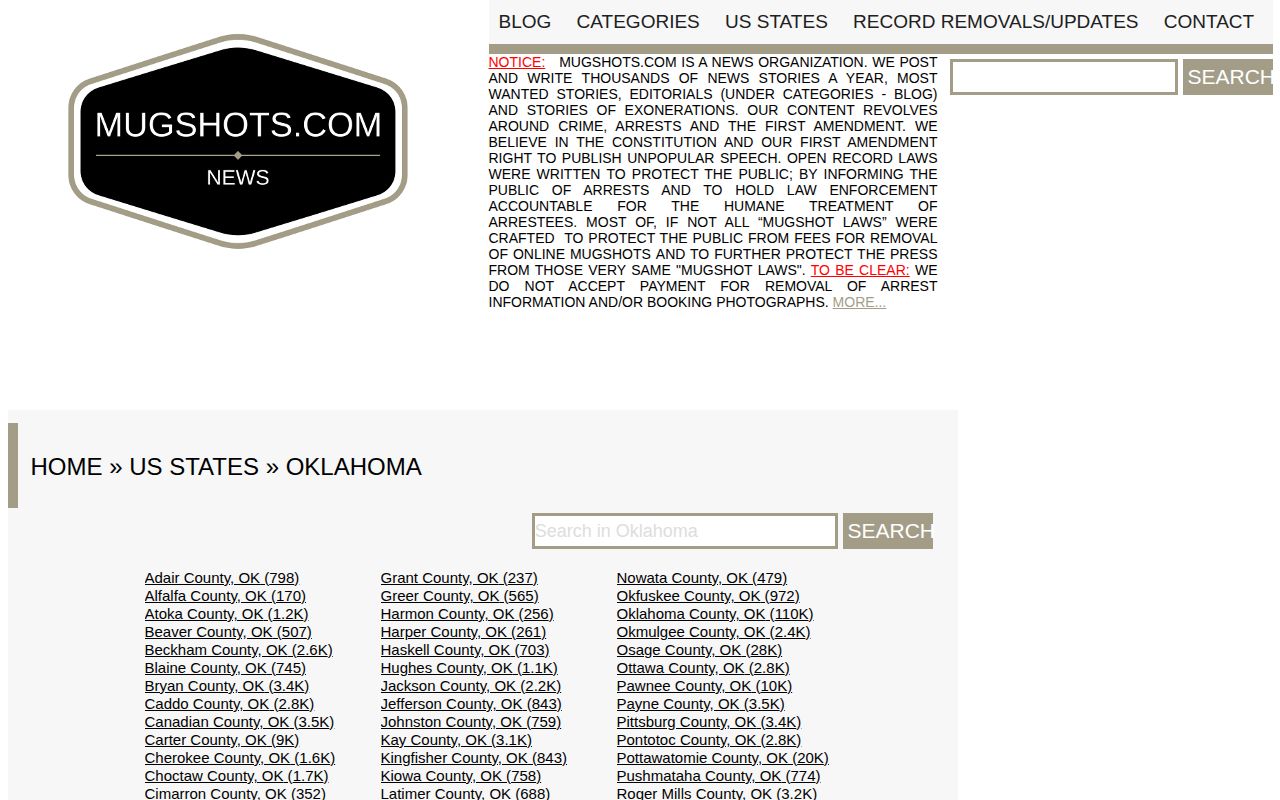
That text reflects the publisher's own statement, nothing more. Official agency and court records confirm a case. RecentlyBooked describes its listings as arrests within a 30-day window. Its free correction and removal policy asks for the page URL, identity details, a reason, and legal documents when they apply.
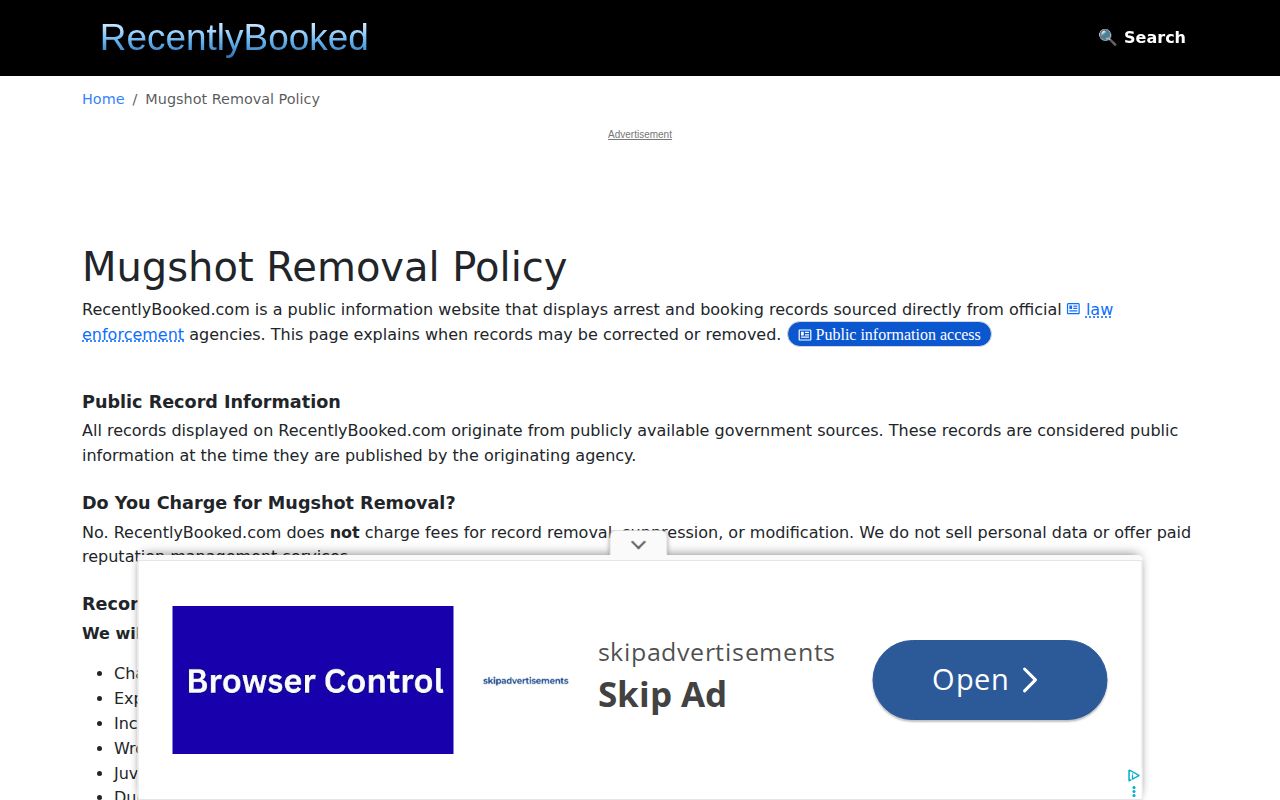
That policy comes from a publisher, not Oklahoma law, and it promises no result. Mugshots.com also describes a free record-maintenance route for court or official documentation.
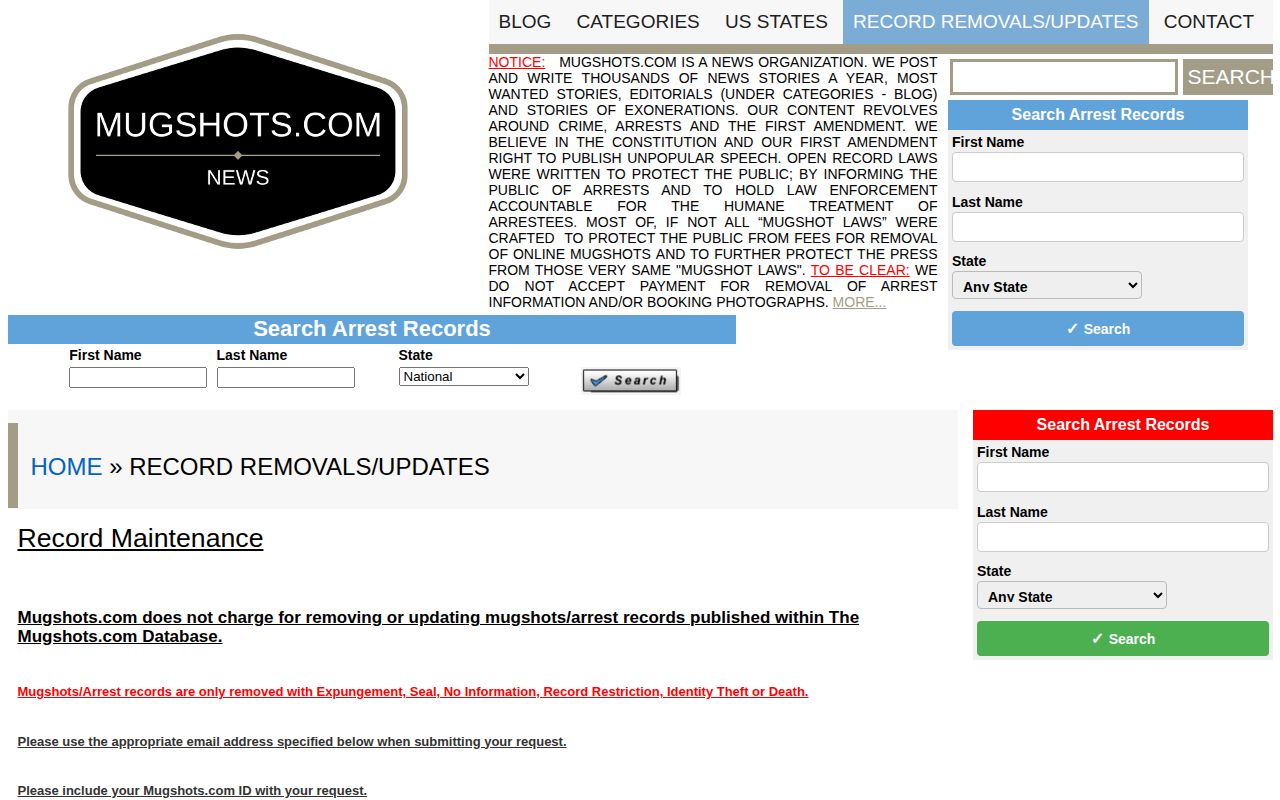
That route is separate from an official seal or expungement order. The other secondary sites offer different correction paths, some unclear. Never pay an intermediary. A correction sometimes needs official court or agency proof. Send it through the publisher's own current free process. Newsrooms may fix a wrong name, charge, or disposition. No blanket free removal right exists for accurate archived reports. A copied image can outlive the roster that first posted it. No private index certifies guilt or current custody.
Busted, Released, or Sentenced
The right source follows custody, not the word mugshot. A person can leave jail. The court case still moves ahead. A sentence can move the person into another agency's system entirely. Use the comparison to pick a starting point, then confirm the record with its custodian.
| Situation | Likely record | What it cannot prove |
|---|---|---|
| Just booked or still held locally | County roster or booking feed; photo display depends on that county's policy. | A charge is not a conviction, and a roster does not give the final case result. |
| Released, bonded, or transferred | The original booking agency's record request and the court docket. | Removal from a current roster does not mean the record never existed or that the case was dismissed. |
| Serving a state sentence | ODOC offender lookup and state corrections record. | An ODOC profile is not the original county booking record. |
| Federal or immigration custody | BOP inmate locator or ICE detainee locator, depending on the holding authority. | Those systems do not show every past or present custody event. |
A wanted listing works differently from a booking roster. ODOC keeps its own fugitive category. State law-enforcement agencies post separate notices, and the U.S. Marshals districts publish federal ones. A name on any of these lists means an agency wants the person, nothing more about guilt or a verdict. For a possible warrant, skip the internet and go to the issuing county or the court. Verify the identity and current status first. An attorney or the court clerk can explain how to resolve it safely. Never approach the person yourself. The Most Wanted page lays out these layers and the safe tip routes, and an emergency always belongs with 911 rather than any online form.
Old Records and Changed Outcomes
An arrest record does not vanish just because it leaves a live roster. The entry may still sit in a court file. A state archive, a newspaper, or a private index can hold it too. Oklahoma law gives agencies no duty to build a new record for an online search. Nor must they keep every booking photo forever. Retention schedules, holds, digitization projects, and transfers to archives all reshape what survives. The current custodian can explain what happened to a record. It may have been destroyed. It could sit in closed storage or have been sent elsewhere.
Older prison material has its own trail. The Oklahoma Historical Society holds prisoner picture cards and intake ledgers. The collection has gaps, though. The State Archives sometimes receives transferred county or agency records too. Neither claims a complete statewide county mugshot collection. The Old Mugshot Archives page walks through the request path and how to label a source. That way, a prison card or newspaper image never gets mistaken for a county booking photo.
Court outcomes can also change what an old entry means. Sealing and expungement bind the official record under the order. A saved screenshot may need its own correction request. Check the court's disposition before trusting a stale result.