
Famous Oklahoma Mugshots and Records
A famous booking photo often outlives the brief event behind it. Copies spread fast. News sites reuse them. Sometimes a prison identification card gets mistaken for the original booking image. A picture by itself says nothing about the charge filed or how a case closed. Follow the record path instead. Name the arresting agency. Pull the court docket. Then read the entries that show a plea, dismissal, acquittal, sentence, appeal, or new trial.
Oklahoma's notable cases cross custody lines. Timothy McVeigh's first Oklahoma arrest came after a traffic stop by a state trooper. Yet the bombing prosecution played out in federal court. Terry Nichols was arrested in Kansas. OSBI agents captured Gene Leroy Hart in Adair County. A Mayes County jury later acquitted him in the murder case. Richard Glossip's Oklahoma County case climbed all the way to the U.S. Supreme Court, which reversed the judgment and ordered a new trial. Keep each custody record and court file distinct in any account.
Notable Oklahoma Arrest Records
Treat the records below as documented leads rather than a photo gallery. "Where the record lives" marks a starting point only. No entry promises that a public booking photo survives or can be downloaded today.
| Case and event | Custody or agency | Outcome and record path |
|---|---|---|
| Timothy McVeigh, 1995 Oklahoma traffic arrest | Oklahoma state trooper; later federal investigators | Federal conviction and execution in 2001. Begin with the DOJ Inspector General OKBOMB report, then seek the specific state arrest or federal court record. |
| Terry Nichols, 1995 bombing case | Arrested in Kansas; federal case in Oklahoma | Federal conviction and life sentence. The DOJ Inspector General executive summary explains the federal case, not an Oklahoma county booking. |
| Michael Fortier, federal bombing case | Federal investigative and court records | He pleaded guilty and was sentenced. The DOJ Inspector General summary gives the federal case context, not a county-roster result. |
| Gene Leroy Hart, Camp Scott case, 1978–1979 | OSBI capture in Adair County; Mayes County court | The jury acquitted Hart in the Camp Scott case. The Mayes County ODCR case identifies the court file; the original booking photo was not verified. |
| Charles “Pretty Boy” Floyd, Sulphur arrest, 1932 | Oklahoma arrest and state-prison history | The FBI records his arrest and later death in Ohio. See the FBI history and Oklahoma Historical Society collections; no Oklahoma trial result is implied. |
| Richard Glossip, Oklahoma County case | Oklahoma County detention and courts | The prior conviction and death sentence were reversed and remanded for a new trial in 2025. The U.S. Supreme Court opinion records that disposition. |
| Henry Starr, Okfuskee County case | Okfuskee County court and Oklahoma prison records | The Oklahoma Court of Criminal Appeals affirmed a conviction for illegal liquor possession. See Starr v. State and the state-prison card collection. |
| Al Jennings, territorial-era case | Oklahoma court, prison, and historical records | An 1899 life sentence was followed by a pardon. The Chronicles of Oklahoma article documents the later history. |
Several of these cases involve state or federal records that are now historical. Label an archive portrait or prison card by its actual record type. Not every old photograph is an arrest mugshot.
Note: A record path identifies a custodian, but it does not confirm a surviving public photo or current custody status.
McVeigh’s Oklahoma Arrest Record Path
The DOJ Inspector General's OKBOMB report places an Oklahoma state trooper's traffic stop less than 80 miles from Oklahoma City. The stop came about 77 minutes after the bombing. The date was April 19, 1995. The trooper arrested McVeigh for unlawfully carrying a handgun. Federal officials later named him a bombing suspect. So one man left behind two records: a state arrest and a federal prosecution.
The federal case ended in conviction. McVeigh received a death sentence and was executed in 2001. The report gives the documented sequence of events. Noble County lists no public booking-photo file for the stop today. A trial or investigative image should never be relabeled as the state booking photo. For a modern lookup, start with the arresting agency. Then use the federal docket for the charges and judgment. The DOJ Inspector General report is the lead source for the Oklahoma stop. It also anchors the case history. It offers an official record view, not an arrest photo.
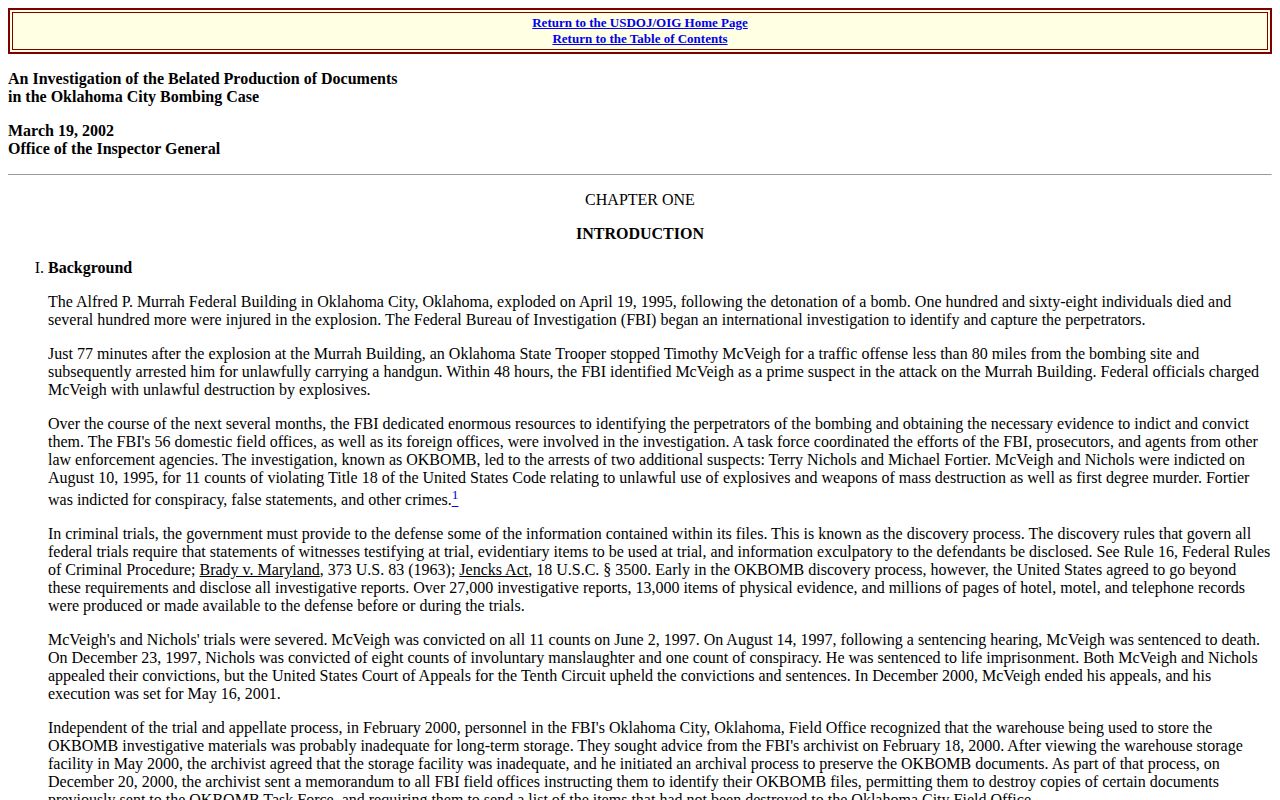
The report explains why one person can hold a state arrest record and a separate federal prosecution. Ask any custodian for the specific event you need rather than hunting for one all-purpose file.
Hart’s Capture and Acquittal
OSBI's own history says agents captured Gene Leroy Hart in Adair County on April 16, 1978, after more than four years at large. The investigation targeted the 1977 Camp Scott murders. Hart stood trial in Mayes County. The jury acquitted him there. He went back to prison on prior convictions and died there in 1979. That acquittal sits at the heart of the record.
The Mayes County case appears in ODCR as State of Oklahoma v. Hart. OSBI's history covers the capture and context. The docket identifies the court proceeding itself. No original booking photograph is available for download today. A secondary picture should never stand in as the official booking image. A name, a charge, and an old photo still fall short of the full story. The court file records the result that followed.
For any other arrest, keep the same order. Identify the arresting agency, locate the right county court file, and read the final entries. If the outcome was an acquittal, say so plainly.
Glossip’s Reversed Judgment
Richard Glossip’s Oklahoma County case is a lesson in reading records carefully. He was convicted. He was sentenced to death. Then, in 2025, the U.S. Supreme Court stepped in. The opinion described documents the prosecution had withheld, along with false testimony that was never corrected at trial. That combination was too much to ignore. The Court reversed the earlier judgment and sent the case back for a new trial.
The ruling also touched on the Oklahoma County jail. Evidence there involved the co-defendant’s lithium prescription. That detail links several files that are easy to blur together. The arrest record, the district-court case, the Oklahoma appellate record, and the Supreme Court opinion all tell different parts of the story. A booking photograph cannot stand in for the 2025 opinion, and an old sentence cannot be cited without its reversal. Any full docket search should reach the post-conviction entries, not stop at the first charge.
Note: When a court sends a case back for a new trial, the earlier judgment no longer states the full current posture.
Floyd’s Arrest and Prison Trail
Charles Arthur “Pretty Boy” Floyd left a paper trail across Oklahoma. Per the FBI’s historical account, he was arrested in Sulphur on March 9, 1932. The charge was bank robbery. He then did time at the Oklahoma State Penitentiary in McAlester. In 1934, the FBI shot him in Ohio. He died there. The FBI history lists no later Oklahoma trial outcome for the 1932 case. That narrow account beats slapping a modern county booking label on an old portrait.
Two archival paths follow the arrest and prison trail. The FBI history covers the federal side. The Oklahoma Historical Society’s photograph collection and prison records run on separate tracks. Neither is a current roster. A historical portrait is not automatically a booking image either. When an archive labels an item a prison card, portrait, or collection photo, keep that label. Then cite the collection record. The FBI historical case file is the federal source for the Sulphur arrest. Its page view supplies context for the record path. It is not a mugshot hosted here.
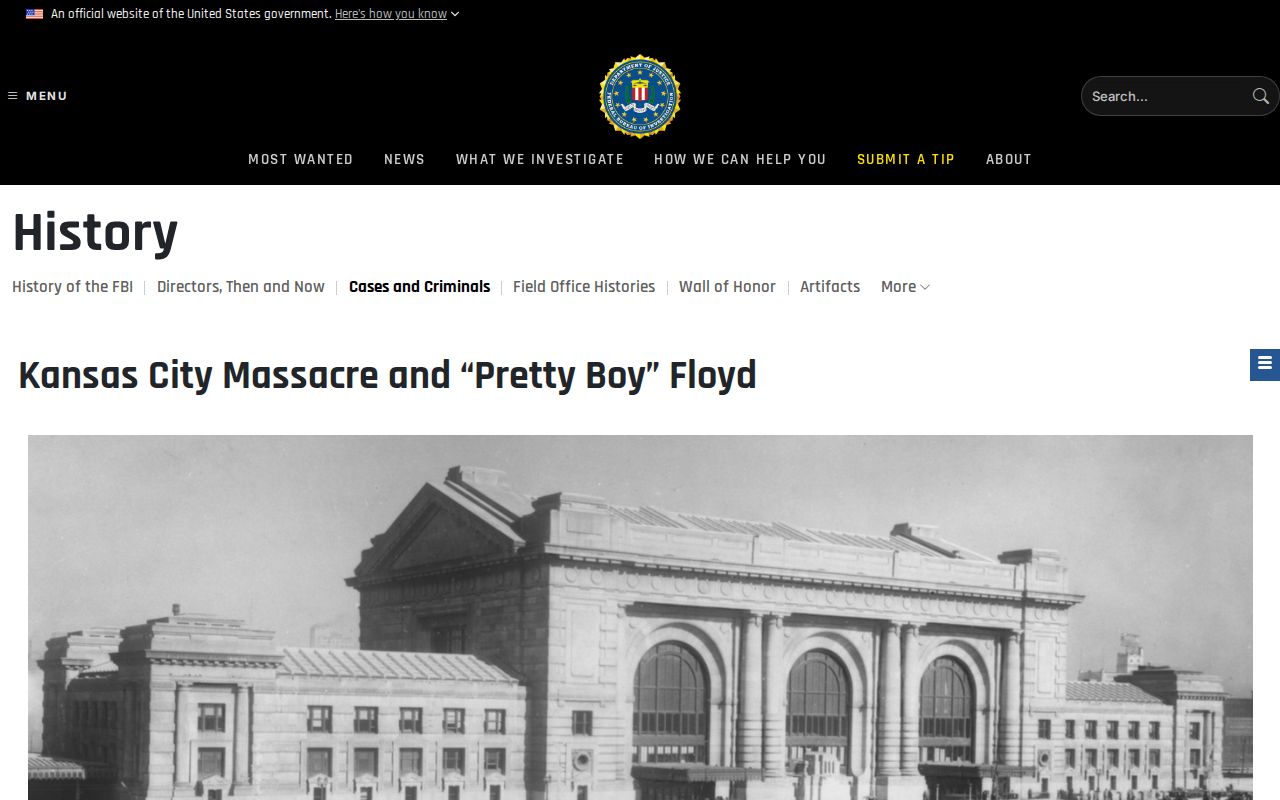
Old records demand care. Follow the source the archive itself names, and confirm whether an item is a booking, prison, court, or news record before calling it anything else.
Oklahoma Prison Cards and Court Files
Henry Starr and Al Jennings make a useful pair. They prove that historic prison material and court files belong side by side. In Starr v. State, the Oklahoma Court of Criminal Appeals affirmed a conviction. The charge was illegal possession of liquor out of Okfuskee County. The opinion fixes the conviction. The Oklahoma State Penitentiary prisoner-card collection may hold a historic image. That holds only if a relevant card survives. The archive might instead identify a prisoner picture card or a fingerprint card.
Jennings reaches back to Oklahoma Territory days. The cited Chronicles of Oklahoma article recounts his 1899 life-imprisonment sentence and later pardon history. His paper trail may run through newspapers, court records, prison material, or a photograph collection. A later public portrait does not become a mugshot. The man once faced a criminal case, but that is not enough.
The Oklahoma Historical Society prisoner-card collection describes picture cards, fingerprint cards, intake ledgers, and other prison material. Gaps exist in what survives. It is a state-prison collection, not a complete county jail archive.
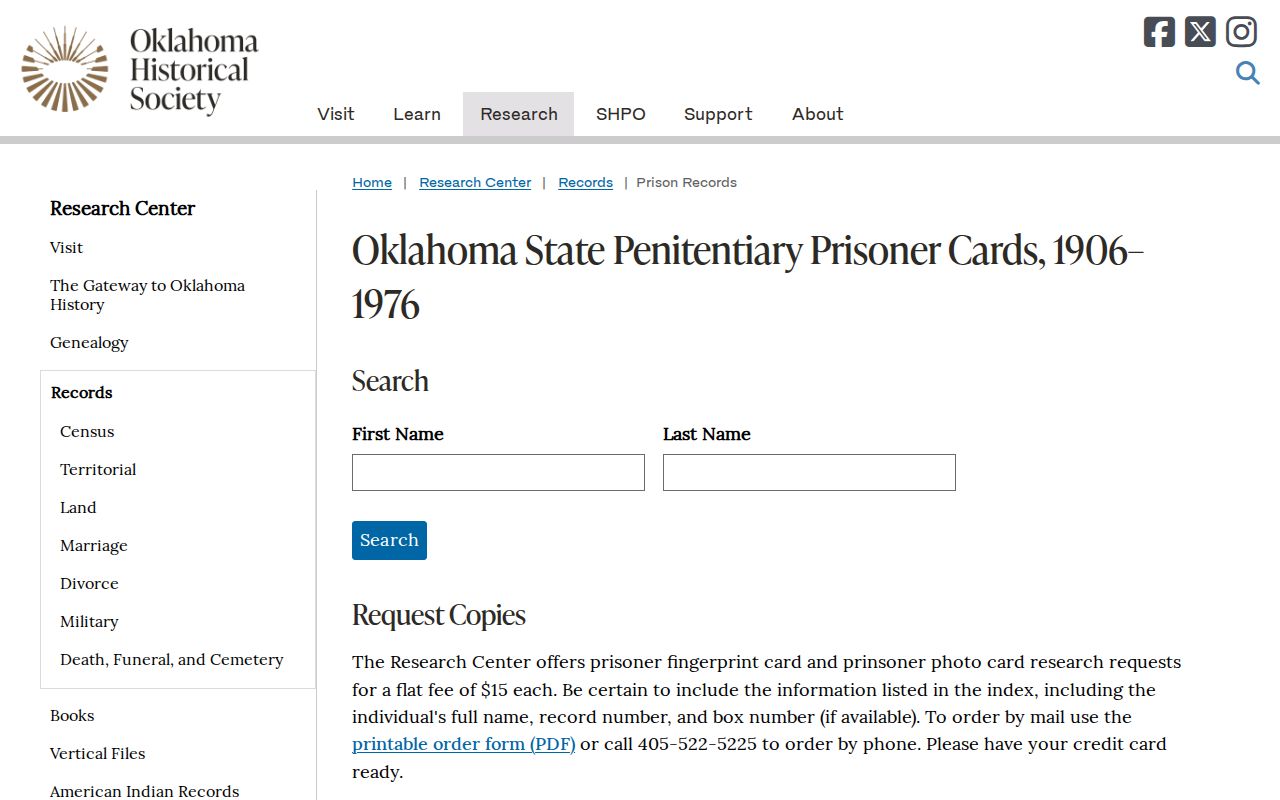
The archive interface helps you tell one kind of source from another. Cite a returned card by its collection details rather than treating it as a universal record of every arrest.
Note: Prisoner cards document state-prison intake and do not establish that a county booking photograph survived.
Look Up an Oklahoma Arrest Record
A famous case gets the same source checks as any other booking. Oklahoma’s official court portal is OSCN. It points to ODCR for courts outside its network. The OSCN page shows a search interface, not a case result. A name search is only a start. Confirm the county and case number first. Then read the docket through the latest known disposition.
The OSCN court-records search covers participating Oklahoma courts. When a court is missing there, use ODCR or call the clerk. The Oklahoma archive collections hold older prison and government records. The statewide Oklahoma mugshot and arrest lookup maps county booking routes for current records.
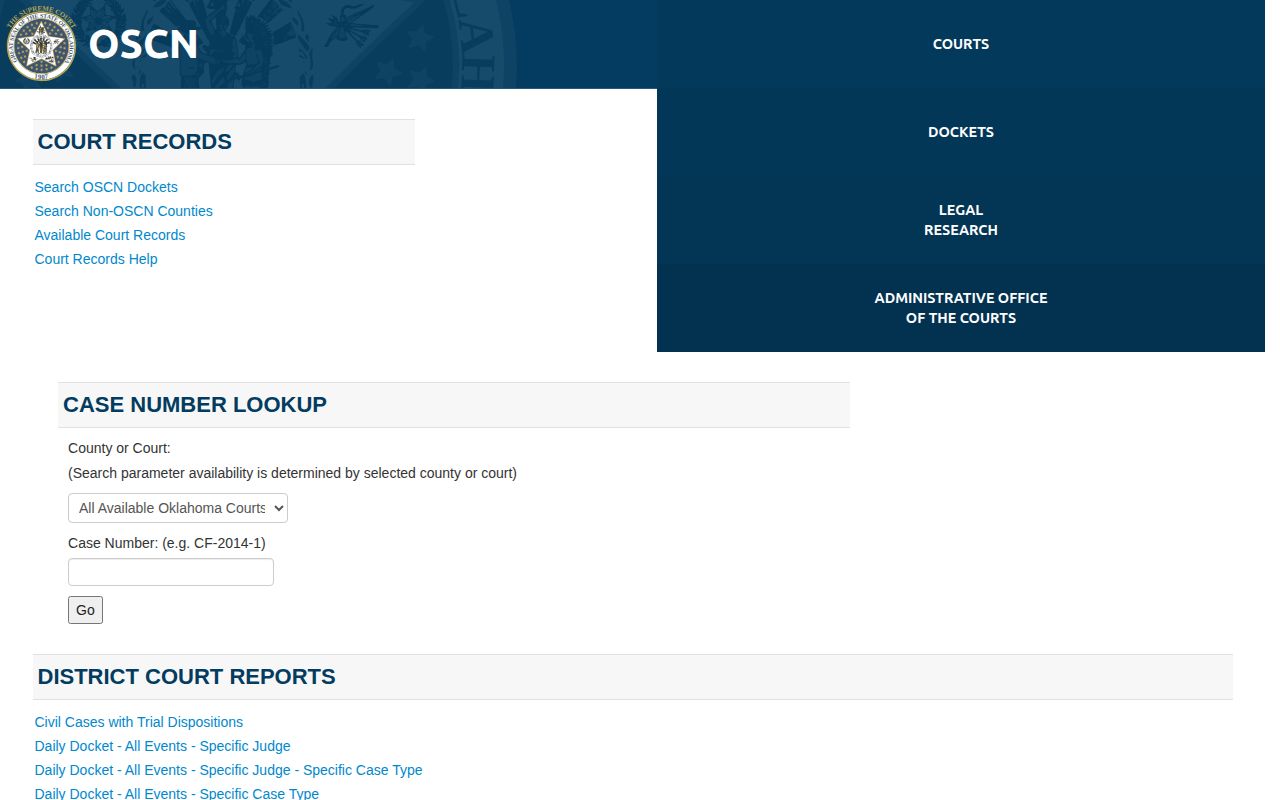
The portal image shows the court-search path. It displays none of the cases above. Pick the correct court and read the docket, rather than trusting a search snippet or a copied photo.
- Start with the arresting agency or jail that created the booking record. Ask for the event date and the specific record type, not a general criminal-history summary.
- Search the correct county court system by name, then verify the case number and county. If a match is uncertain, ask the clerk for help identifying the docket.
- Read the latest entries for dismissal, plea, acquittal, sentence, appeal, reversal, or a new trial. A charge line from booking is not the disposition.
- If the case is old, ask the agency whether the record was retained, transferred, or destroyed under its schedule. Then check the State Archives, OHS, and local newspapers.
- If a reliable order shows that an online record is wrong or sealed, give it to the official custodian first, then use the publisher’s documented correction process.
ODOC, BOP, and ICE searches cover their own custody systems only. They cannot replace a county booking record or court docket. Treat none of them as a statewide archive of every arrest photo.