
Oklahoma Booking Photos as Public Records
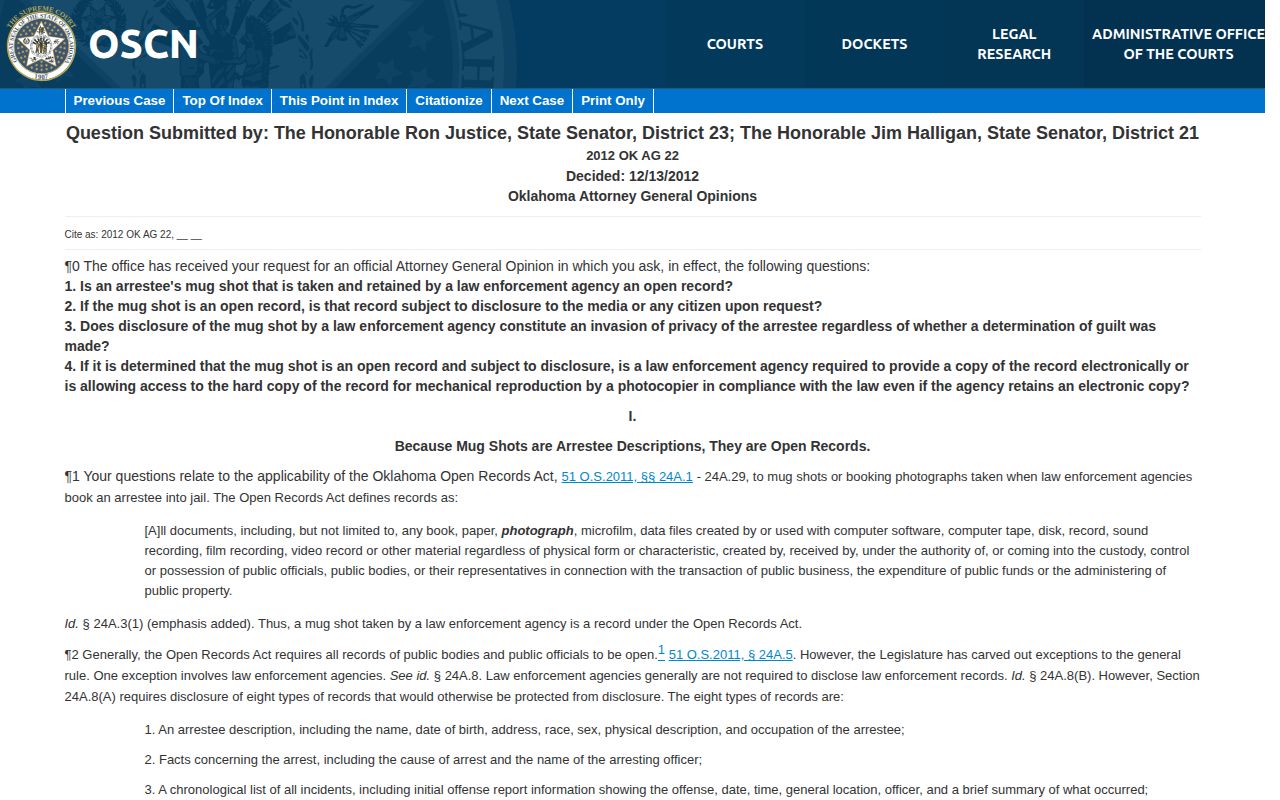
Oklahoma treats most booking photos as public records. The reason sits in 51 O.S. §24A.8(A). That statute opens certain law-enforcement records once an agency keeps them, including an arrestee's description along with jail-register and booking details. Attorney General Opinion 12-022 reads the photograph itself as part of that description. So a government-held image is open, subject to other laws and the facts of the request.
That answer has limits. A county can hold a photo without publishing it. Some rosters list only people still in custody. Other systems show no images at all. Records can also be withheld or redacted under exceptions to the Act. An old copy on a private page is never a custody update. Want the truth of a record? Find who made it, when booking happened, and whether the court later dismissed, changed, or resolved the case.
What Oklahoma Open Records Law Covers
51 O.S. §24A.5 holds the general access rules. It covers specificity, fees, and the release of parts that can be separated from exempt material. Section 24A.8(A) handles the law-enforcement list itself. That list spans an arrestee's description, arrest facts, and jail registers or booking entries. A 2012 Attorney General opinion applied the framework to booking photographs. It never orders a sheriff to create a photo, build a searchable gallery, or keep every image forever.
The split matters when a request is denied in part. Ask the custodian to name the legal ground. Ask also for any non-exempt part that can be separated. A public booking entry can sit beside a withheld investigative narrative or protected victim detail. A photo is not a court docket. It is not a state criminal-history file either. Each record has its own custodian and rules.
See the Attorney General's Opinion 12-022 for the controlling reading. It links booking photographs to an arrestee's physical description. Its reasoning supports access to a government-held image, while the Open Records Act still governs each specific record and any valid exception.
An opinion is legal guidance, not a promise. Many county rosters show no face at all. When no image appears online, a focused request to the agency that booked the person is the direct route.
Oklahoma’s Unenacted Mugshot Bills
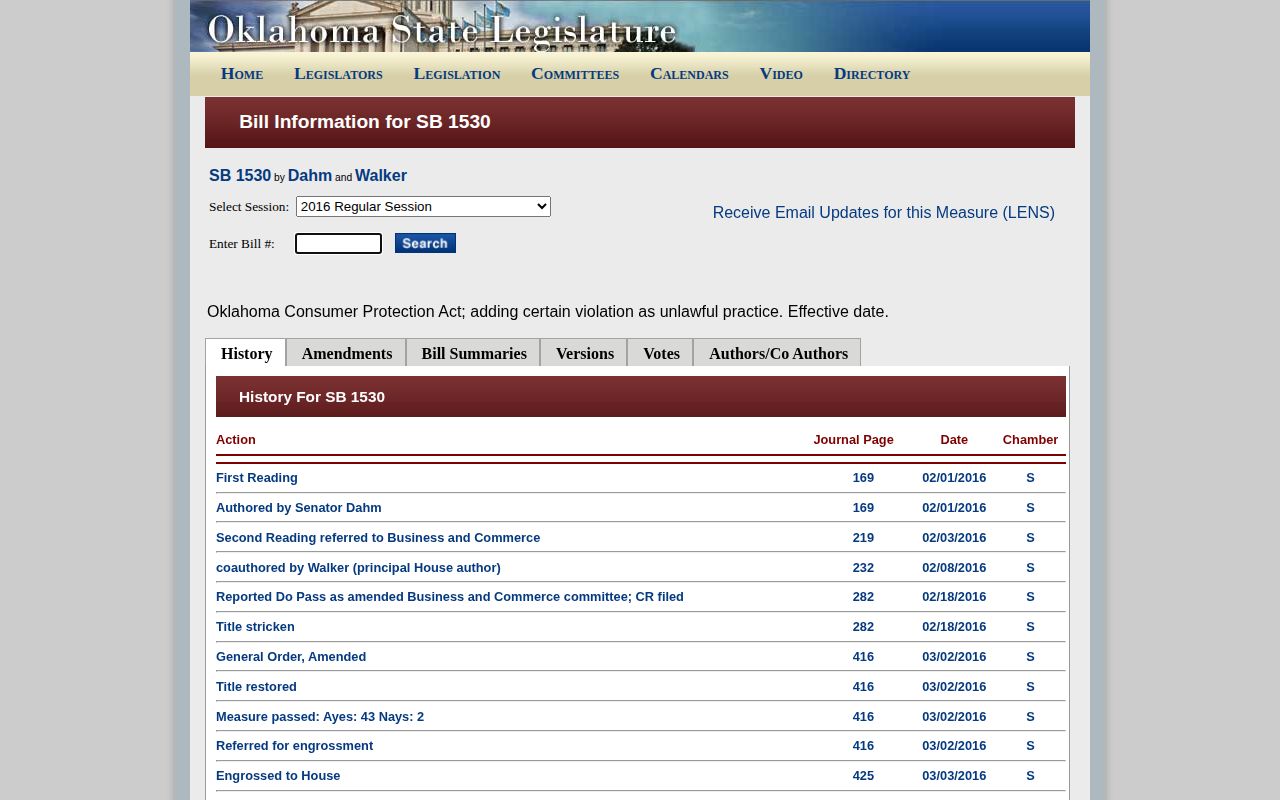
Oklahoma has no enacted pay-to-remove statute for booking-photo pages. No special deadline or damages remedy exists statewide. Senate Bill 1530 tried to change that in 2016. It proposed a Consumer Protection Act provision at Title 15 §755.6. The proposed text would have barred demands for payment to remove or revise arrest and booking information in cases where charges were never filed, dismissed, or expunged. The bill cleared the Senate. Then the House referred it, and nothing more followed: no House passage, no enrollment, no governor's approval, no law chapter.
The official SB 1530 history shows exactly where the proposal died. Cite it as history, not as a removal right. Current Title 15 carries no §755.6 language. So the proposed response period and penalties cannot be promised as present Oklahoma law.
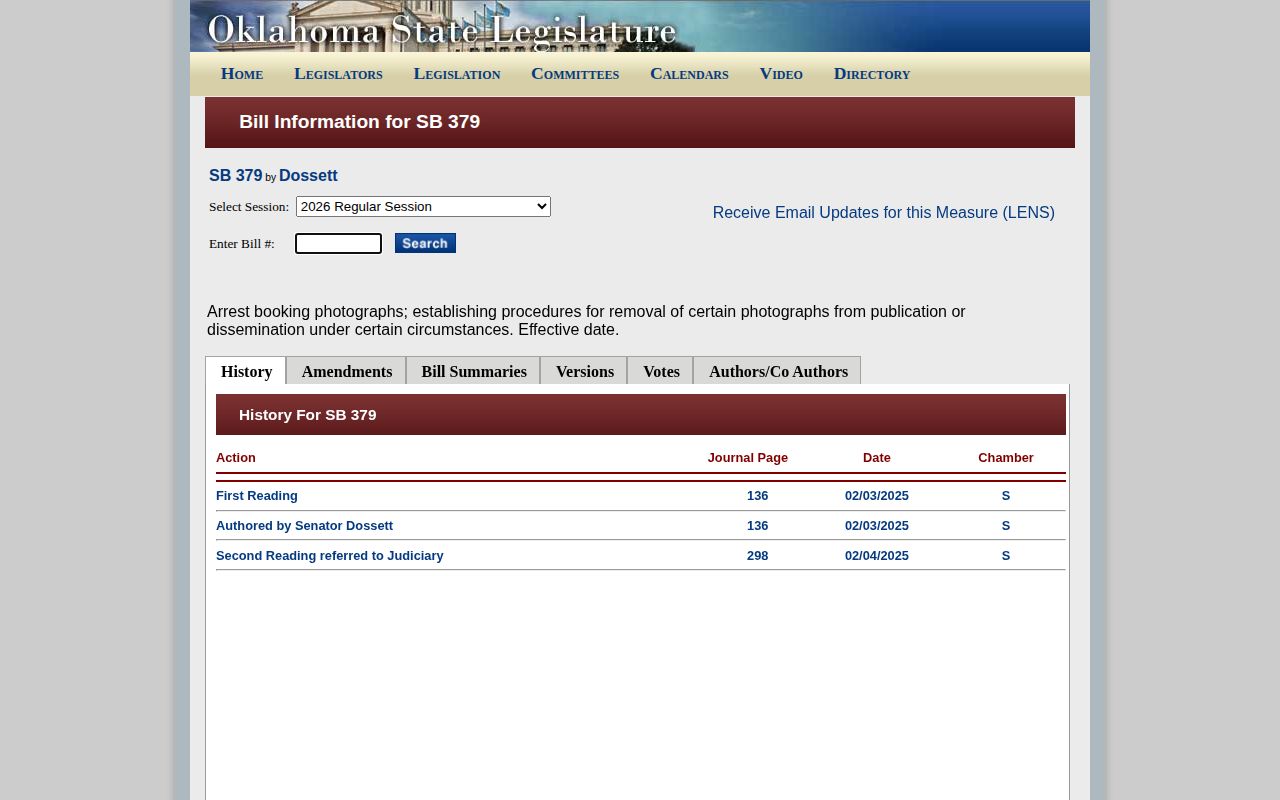
The Senate kept circling the issue. A 2023 interim study on publishing arrest booking photographs for profit laid out the tension plainly: booking images serve a public-record purpose, yet private publishers copy them far beyond an agency's control. Senate Bill 379 proposed another removal process. Its official history records introduction and referral to the Judiciary Committee. That is where it stopped. The SB 379 history creates no removal deadline or damages claim today. Bill status and statute text can change. Check the current law before relying on any rule.
Note: A bill number, proposed response time, or draft penalty is not a present removal right unless the Legislature enacted it.
Why Oklahoma Mugshots Vary Online
Oklahoma has no single booking-photo portal. All 77 counties run different systems. Some post searchable current-inmate pages; others rely on vendor rosters, daily lists, release windows, or request-first policies. Urban counties lean toward web rosters, while rural offices more often point to a phone call or records request. These are broad patterns, not rules.
| Official access pattern | What may appear | What an empty result means |
|---|---|---|
| Photo-bearing roster | Current custody or recent bookings with an image when supplied; examples in the county research include Cleveland, Osage, Wagoner, and Washita. | The person may be released, transferred, outside the date window, or not matched by the search. |
| Photo-capable roster | Booking fields with an image area, sometimes marked “no image available”; examples include Comanche, Muskogee, and Delaware. | No image returned does not prove that no photograph was taken. |
| Text-only or request-first | A daily inmate list, a general sheriff page, or no verified public roster; examples include Pontotoc, Garfield, and counties listed as request-first in the research. | The agency may still hold a booking record or photo that can be requested. |
A jail roster only shows who is in custody right now. Once someone is released or moved, the photo comes off the official page. The case can still be open. Third-party sites work differently. A copied image can linger long after the fact, sometimes stale, sometimes missing the outcome. So a result proves nothing. Neither does an image still floating around. Ask the agency directly which system covers the date and person you care about.
Where Oklahoma Booking Records Remain Searchable
No photo on a county roster does not mean the trail is cold. Start where the booking happened. The jail or detention center comes first. Then try the police or sheriff records unit that made the arrest. Want the outcome instead of the intake? The court docket holds that. State-prison photos belong to ODOC. Federal or immigration custody runs through a separate federal office. The statewide Oklahoma arrest and mugshot lookup maps the county roster and feed routes. ODOC offender photos cover people sentenced to state custody, not county bookings.
An Open Records request should be narrow and specific. Include the full name. Add the county or agency, an approximate booking date, and a case or booking number if you have one. Ask for the booking sheet or jail-register entry plus the booking photograph from that event. Request electronic delivery in whatever format is kept. Ask for a fee estimate. Ask for the statute cited for anything withheld. A tight date range helps the custodian locate the record fast. Oklahoma law allows reasonable copying charges, and sometimes added fees for commercial use or disruption.
Courts are a separate track. OSCN covers participating courts and points to ODCR for the rest. Search by name first. Then confirm the county, case number, and identity before trusting any charge as the right case. Dockets can show dismissal, plea, deferred disposition, judgment, sentence, appeal, or later post-conviction action. A booking record settles none of that. Federal custody is its own lane too. The BOP locator lists federal inmates back to 1982. It is not a public mugshot archive. ODOC holds people sentenced to state custody, not everyone arrested in Oklahoma. A blank state result could mean county jail, another state, federal custody, or release.
Note: For any search result, compare the county, booking date, agency, case number, and court outcome before treating it as a match.
Sealing Does Not Remove Every Copy
Oklahoma's adult expungement law offers several paths. Eligibility turns on case history and the current statute. Title 22 lists examples like acquittals, reversals, dismissals, certain arrests with no charges filed, eligible deferred cases after waiting periods, and some qualifying nonviolent offenses after sentence and the required time. The rules shift, so rely on the current statute and court forms or get legal help. A favorable outcome alone does not settle eligibility.
A full expungement closes the record to the public. Partial sealing may still leave law enforcement with access. The court can order the clerk, arresting agency, jail, OSBI, and other named custodians to seal or expunge what they hold. Send a certified copy of that order to every office named. Ask each one what became of its booking photo. OSBI's expungement information spells this out. It requires a court order for complete removal from its files and separates a full expungement from a mere update after a deferred disposition.
| Route | What it can change | What it cannot promise |
|---|---|---|
| Agency correction | Fix a wrong field or record held by the creating office after it reviews reliable proof. | It does not change another agency’s separate file or a publisher’s copy. |
| Court seal or expungement | Changes access to records held by the court and other custodians named in the order. | It does not automatically erase an earlier copy held by a private publisher, newspaper, or search engine. |
| Publisher’s free policy | May correct, update, or remove a secondary page under that publisher’s rules. | It is not a state-law deadline or a promise that every copy will disappear. |
| Search-index refresh | May update a search result after its source page changes or is removed. | It does not change the source page or clear every saved copy. |
Start with the court order or certified disposition for the adult record. Hand it to the official custodians first. Then send the same proof to each secondary publisher, with the exact page address and the field needing correction. Already-changed page? Use the search engine's outdated-content process. That fixes the index, not the government record behind it.
Free Publisher Correction Paths
Two publishers lay out a free route. RecentlyBooked's removal policy charges nothing and takes requests for dismissed, sealed or expunged, incorrect, outdated, wrong-person, juvenile, or duplicate records. It wants the page URL and identifying details. Legal proof applies where relevant. That policy is the publisher's own process, not a legal guarantee.
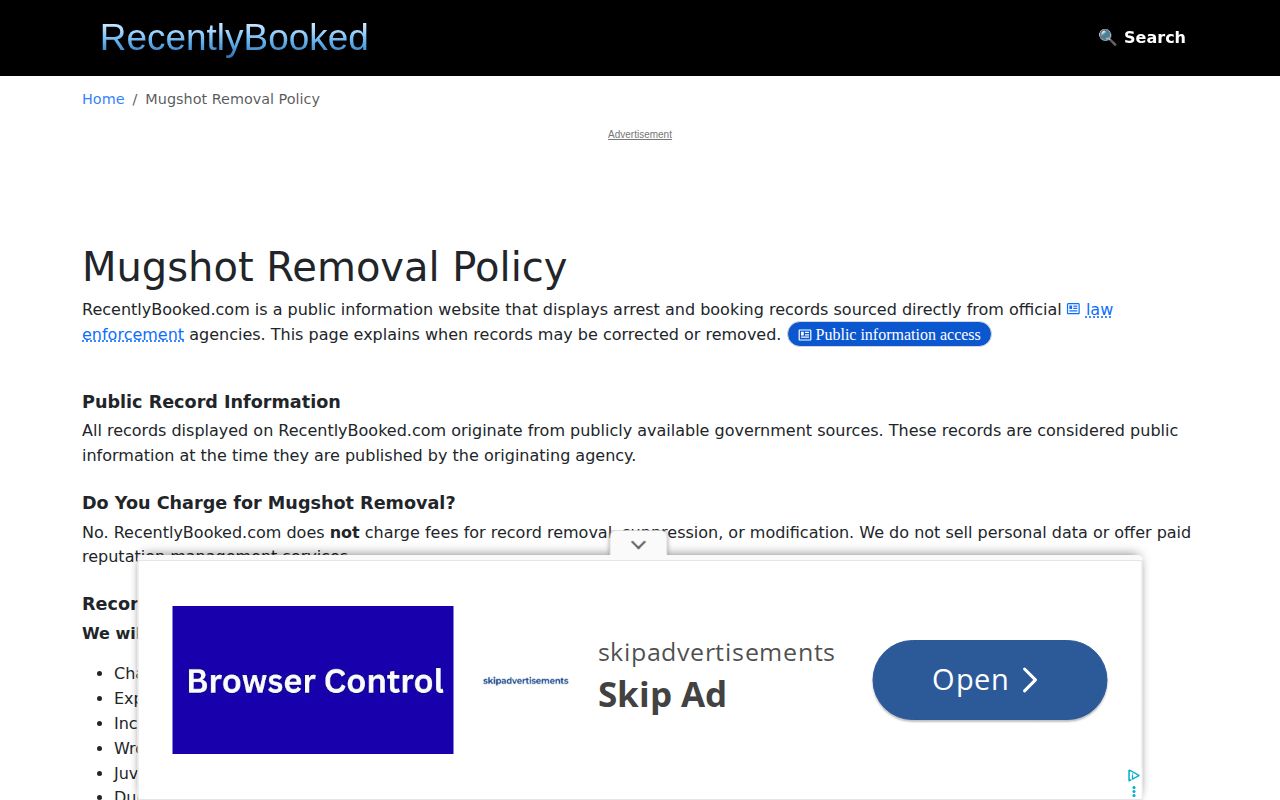
A publisher policy page is not a state agency procedure. If the official record is wrong, the jail or court still needs to act. It must correct its own copy. Mugshots.com's record-maintenance policy also makes removal and updates free. It describes document-based requests for expungement, sealing, identity error, death, or favorable and completed outcomes. It also asks for its record ID. Its processing window is a publisher claim. That is not a statutory deadline. BustedNewspaper's statewide page posts no dependable free removal policy. Arrests.org and Mugshots.zone list no statewide process either. Reach those publishers through a current, working route and expect nothing.
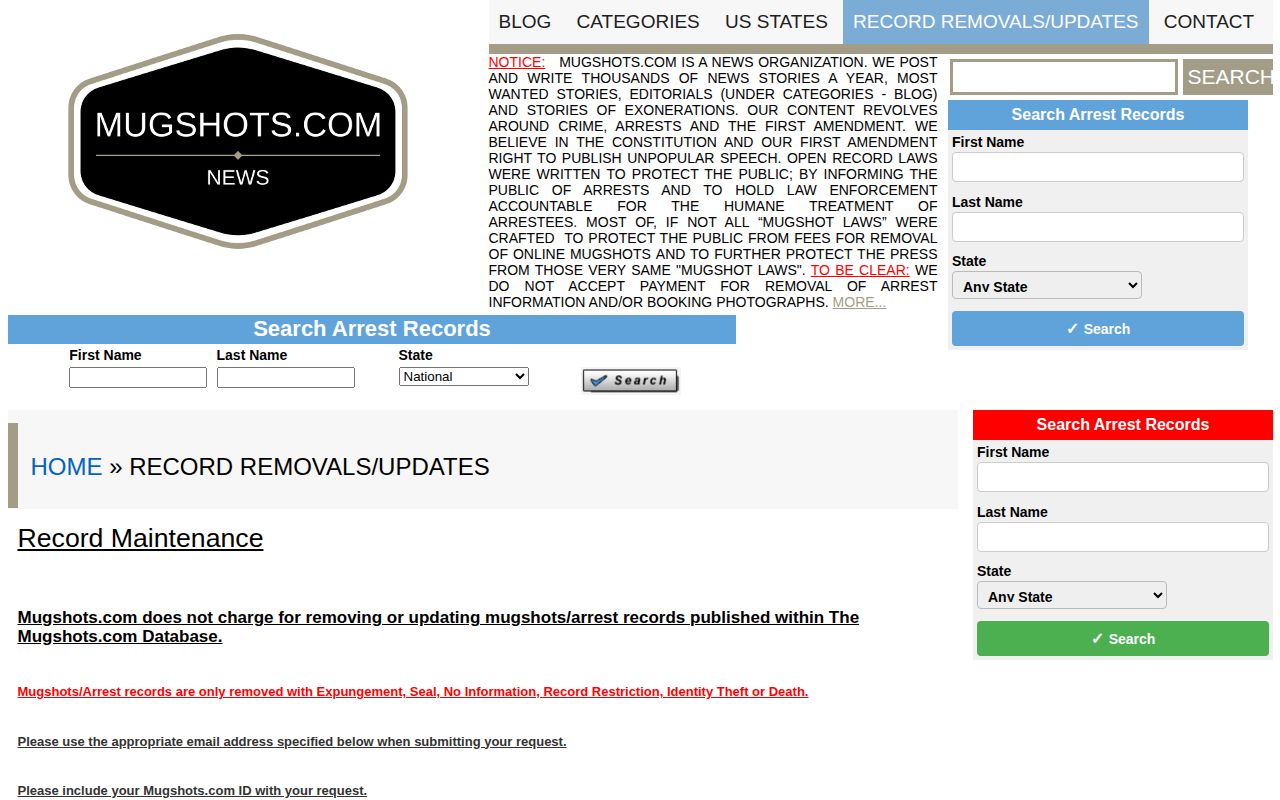
The publisher's own record-maintenance terms govern here. They are not a government order. They cannot force an image elsewhere to come down.
Watch for anyone promising a legal outcome for an upfront fee. Paying an intermediary replaces nothing. It is no substitute for an agency correction, a court order, or a publisher's free process. Keep copies of every request and every source document you sent the record holder.
Note: A news archive, saved screenshot, social-media post, or search result may remain after an official record is sealed.
Oklahoma Juvenile and Withheld Records
Juveniles get separate treatment under Title 10A. That statute keeps most court, police, and detention files about minors closed. Mugshots often fall inside the seal too. Exceptions exist for adult certification, youthful-offender cases, traffic matters, and certain serious or repeat offenses. Whether a record opens up hinges on the case, so never lift a child's name or photo from a source that may lack the right to publish it. The court or agency can give a firm answer for that situation.
Other barriers can block parts of a file. Victims, witnesses, informants, and active investigations may all be protected, along with medical details or anything covered by another statute or court order. So an office might share one public booking entry while withholding the rest. Ask for the public portion and the reason for each redaction. Booking packets are not uniform, and no page carries the same status by default.
Spotting an error? Start with the office that made the record. Point it to the exact field and attach solid proof, like a certified disposition or a court order. A dismissal, acquittal, pardon, or finished deferred sentence can each justify an update, though their legal effects differ. One more wrinkle: when booking came from one agency and prosecution from a different court, both may have to correct their own copies.